
How a large academic health system migrated data from three legacy platforms on time and with confidence.
At a Glance
3Source Systems MigratedEpic, Cerner, Athena 4Clinical Validation Rounds1 Small + 1 Large + 2 Full Scale |
Tier 3Data TierEpic’s Highest Classification Dec 2025First Go-LiveOn-schedule delivery |
79 / 26,000Tickets Attributed to Conversions< 0.3 % issue rate 5Post-Live Delta LoadsEnsuring full continuity |
The Challenge
A large academic health system in Califnornia was consolidating onto a single, unified Epic instance, a transformation that required migrating three distinct source systems simultaneously:
- A legacy Epic instance from a shared platform with another health system
- Cerner, inherited through the acquisition of several hospitals from a national health system
- Athena, used across a collection of independent clinics and providers
This was a Tier 3 migration, Epic’s highest classification, meaning the full breadth of supported data types needed to be converted: discrete clinical records, patient photos, allergy and medication histories, immunizations, eye exam data, FYI flags, notes, labs, and more.
The stakes were especially high on the Epic-to-Epic side. When providers move from one Epic instance to another, they expect their data to follow them completely. Gaps aren’t acceptable, and they’re not always easy to explain.
The Solution: DataBridges
Health Data Movers brought DataBridges, its structured, four-phase delivery framework, to guide the migration from initial scoping through post-go-live stabilization. The framework provided the discipline, checkpoints, and stakeholder alignment needed to manage a project of this scale without chaos.
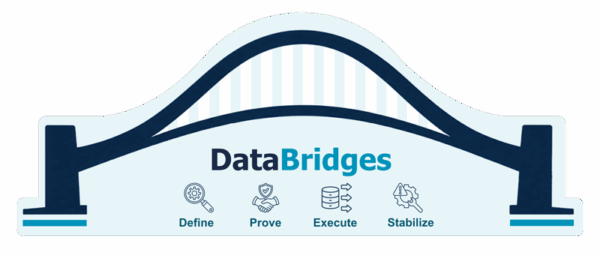
Phase 1: Define | Eliminate Assumptions Early |
|
Phase 2: Prove | Build Confidence Before Scale |
|
Phase 3: Execute | Deliver a Controlled Cutover |
|
Phase 4: Stabilize | Maintain Continuity After Go-Live |
|
Results
The migration went live in December 2025 — on schedule, across all three source systems. The outcomes reflected the discipline the DataBridges framework was built to deliver:
| Outcome | Detail |
| On-time go-live | First go-live in December 2025 and 3 more in February & March 2026 |
| Tier 3 data delivered in full | Labs, imaging, notes, documents, problem list/allergies/medications/immunisations |
| Low post-live issue rate | Fewer than 79 of 26,000 total tickets were conversion-related (<0.3%) |
| Clinical readiness confirmed | Facilitated validation sessions verified providers could deliver care on day one |
| Transparent stakeholder alignment | Weekly workgroup reviews kept clinical, operational, and IT leaders informed throughout |
| Structured post-live continuity | ~5 delta loads completed with clear date-specific data availability communicated at each step |
Why It Worked
The DataBridges framework transformed what could have been a chaotic, high-risk project into a disciplined, predictable process. A few things made the difference:
- Governance was established first. By building a cross-functional workgroup before any data moved, the team ensured alignment, not assumption, drove every scoping decision.
- Validation was progressive. Starting small and scaling up meant issues were caught early, not at go-live. Clinical SMEs were engaged early and often.
- Communication was continuous. Stakeholders always knew what was loaded, what was pending, and what was coming. This reduced anxiety and last-minute surprises.
- The team stayed lean where possible. Downtime windows were minimized; real-time interfaces handled time-sensitive data. Scope discipline kept the project manageable.
- Issues were contained. A dedicated triage structure ensured post-live issues were captured, tracked, and resolved quickly, without burdening the broader IT team.
| Ready to move your data with confidence?
Learn how DataBridges can bring structure, speed, and reliability to your next migration. |